
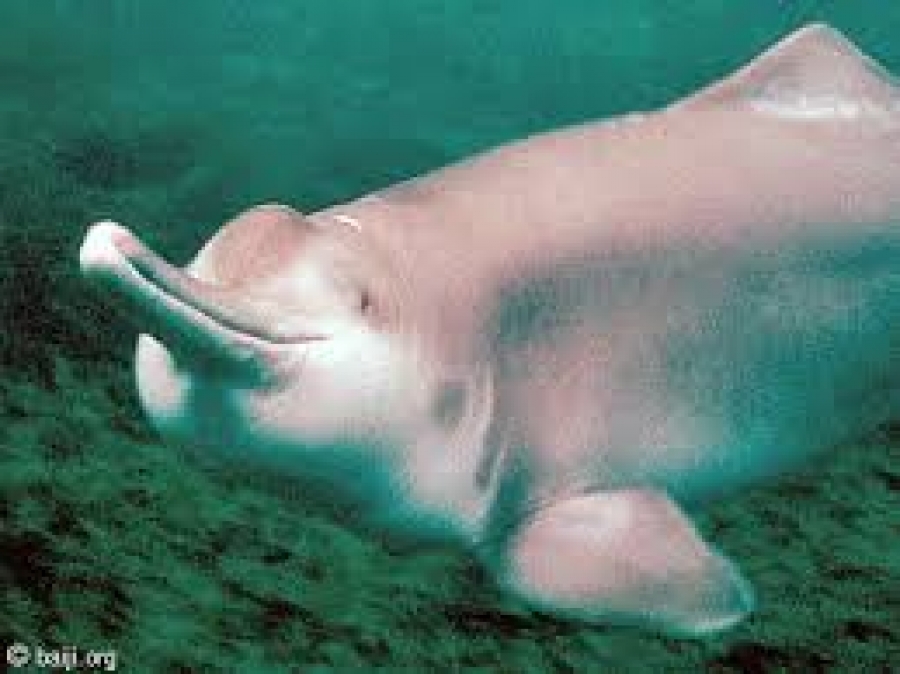
In this week’s episode, we will discuss the baiji; a very special dolphin that has recently made its way into the news for all of the wrong reasons.
Not too long ago, a Dolphin Pod listener wrote in to ask us if we would consider producing a podcast about the lesser known members of the dolphin family. Often times, so much of the research conducted on dolphins focuses on those species that are easy to study: species like the bottlenose dolphins which live near the coast. So it is easy to overlook those less-often-encountered species.
Tag: older content
Happy Holidays!
Hello all! I'm not used to writing field reports in December! But, next week will mark the beginning of DCP's first winter Bimini field season. It is abbreviated (relative to the summer) and somewhat experimental, however, I am greatly looking forward to confirming the year-round presence of the Bimini Atlantic spotted dolphin population – and hopefully get a few more glimpses of those bottlenose!
Dolphins who need dolphins

Researchers at the Dolphin Communication Project get a lot of questions from the public about dolphin behavior, but one question above all the others has given us the biggest kick. And, sparked a rather interesting answer. The question, posed to us once by a young dolphin enthusiast, was ‘How do dolphins get married?’ Not ‘do dolphins get married’ mind you, but ‘how do they get married’.
Mikura Field Site video podcast

This week’s special video podcast showcases the Dolphin Communication Project’s research with the Indo-Pacific bottlenose dolphins of Mikura island in Japan.
Bimini Field Site video podcast

This week’s special video podcast turns the spotlight on the Dolphin Communication Project’s research with the Atlantic spotted dolphins near Bimini island in the Bahamas.
Do dolphins have a language?

{mp3}TheDolphinPod-2006-11-25-45409{/mp3}
NOTE: This article originally appeared as an episode of The Dolphin Pod.
Do dolphins have a language? This is a fantastically interesting question, and one that researchers at the Dolphin Communication Project are asked on a regular basis. The answer can be a bit confusing unless we are all on the same page with respect to what we actually mean when we use the word ‘language’.
Dolphin Researcher Spotlight: Darcie Blanding
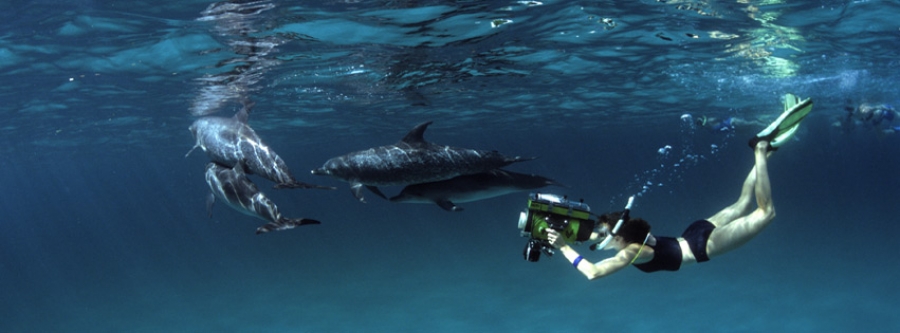
This week’s special video podcast features an interview with Darcie Blanding; research associate with the Dolphin Communication Project.
Dolphins – The Lighter Side

This week’s video podcast showcases the underwater cinematography of Terramar Productions’ John Anderson. This video montage is taken from ‘Dolphins: The Lighter Side’; a DVD produced by John featuring spectacular footage of diverse dolphin species from around the world. John has worked in conjunction with The Dolphin Communication Project on a variety of projects, and has also worked on major Hollywood productions including Master and Commander, and the IMAX film Dolphins. If you enjoy this video podcast, why not consider supporting DCP’s research efforts by purchasing a full length DVD of ‘Dolphins: The Lighter Side’.
Dolphins recognize themselves in mirrors
{mp3}TheDolphinPod-2006-11-07-66907{/mp3}
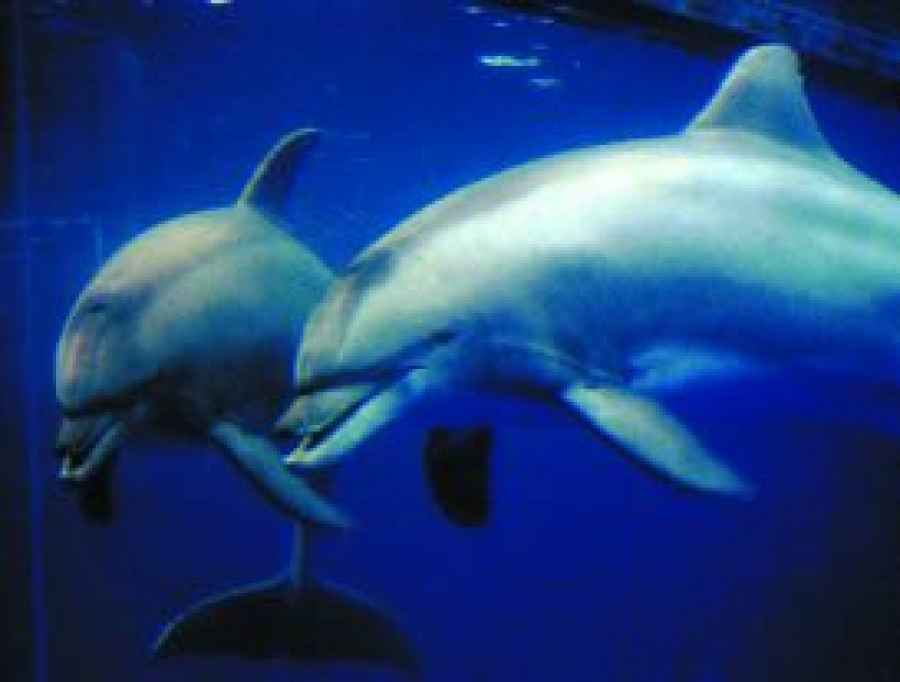
If you’ve been following the news lately, you might have seen a little story about elephants that can recognize themselves in mirrors. This is a rather major discovery for animal scientists – elephants now join dolphins as the only animals other than the great apes and humans that can recognize themselves in mirrors. Many scientists use the mirror self-recognition experiment as a test of an animal’s capacity for self-awareness – a trait often linked with cognitive complexity and intelligence.
The mirror self-recognition test was pioneered by Gordon G. Gallup, Jr.
Dolphin Researcher Spotlight: Kelly Melilo

This week’s special video podcast, produced by John Anderson, features an interview with Kelly Melilo: research associate with the Dolphin Communication Project.